Rupert Bateman
The Seven Dials MysteryRupert Bateman, usually called Pongo, is a serious and capable young man whom Jimmy Thesiger persistently treats as an ass. That comic mismatch becomes consequential: Bateman is suspected in the investigation of Gerald Wade’s death, but the clues clear him, while his own grave suspicions of Jimmy help expose how badly Jimmy has misread him.
Identity and Introduction
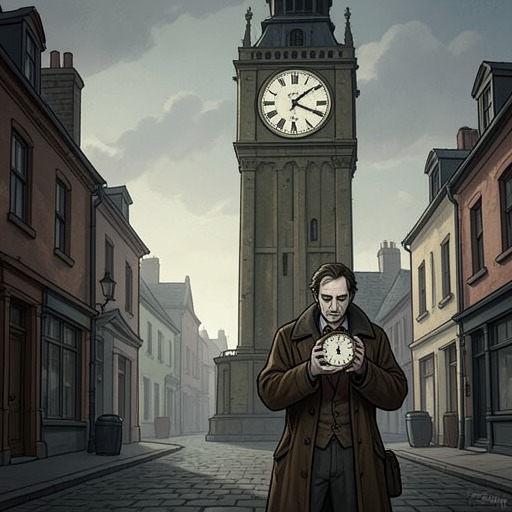
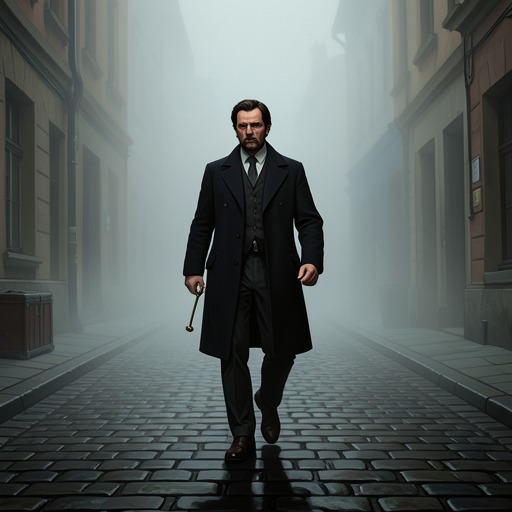
Bateman first appears as a serious, spectacled young man who puts his head through a door to tell Lady Coote that Sir Oswald Coote is asking for her. His manner is brisk and businesslike, and Lady Coote promptly leaves with him. The introduction establishes him as a reliable figure around the household, a contrast to Jimmy’s languid, teasing manner.
Jimmy and Bateman had been at school together. Bateman had been serious and spectacled then, too, and the nickname Pongo had attached itself to him for no particular reason. Jimmy recognizes little change in his old schoolmate: to him, Bateman remains the same sort of fool. This judgment is delivered with the confidence of long familiarity, but the narrative repeatedly places Bateman’s actual competence beside Jimmy’s dismissive account of it.
Competence in the Household
When the young people consider how to wake Gerald Wade, they ask who among them has any brains. Jimmy nominates Pongo, joking that intelligence has been Bateman’s misfortune since youth. Bateman listens patiently to their disjointed explanation, appears poised to escape, and quickly offers a practical answer: an alarm clock, since quiet early tea may not wake someone. He then hurries away. His suggestion is simple, but it is also the solution the group needs, and the scene shows him responding efficiently where the others have made a muddle of the problem.
The same reputation for competence shapes a later decision. The group wants one person to enter Gerald’s room while the others pass things in from the doorway. They rule out the three girls because they might giggle and reject Bill Eversleigh for his height, weight, heavy tread, and clumsiness. Jimmy and Ronny Devereux are considered, but the majority chooses Bateman. Jimmy supports the choice because Bateman walks quietly and, if Gerald wakes, could produce some plausible nonsense to calm him. The episode makes Bateman useful not because the group takes him seriously, but because it trusts his unobtrusive movement and ability to improvise.
Work and Relationships
Bateman’s school friendship with Jimmy gives Jimmy an intimate basis for his mockery, but that familiarity also narrows Jimmy’s view. He calls Bateman Pongo, remembers him as an ass, and treats his earnestness as a settled personal failing. The recurring joke creates an ironic gap between what Jimmy says and what Bateman does: Bateman offers workable advice, moves quietly when chosen for a delicate task, and later proves capable of recognizing danger in Jimmy that others overlook.
His manner earns him a different assessment from the household’s more formal figures. When George Lomax introduces him, he does so briefly, and Bateman bows. During the commotion surrounding the investigation, Bateman addresses George with an efficient suggestion that some of the onlookers be sent away. The moment is small but characteristic: while others react in astonishment, Bateman attends to practical order. Superintendent Battle later calls him efficient, a description that directly conflicts with Jimmy and Bill Eversleigh’s habitual caricature of him.
Suspicion and the Clues
Bateman’s efficiency also makes him a possible suspect. Battle explains that he had considered him partly because Bateman took the clocks into Gerald Wade’s room on the night of the death. That access could have allowed him to place the bottle and glass beside the bed. Battle also knew that Bateman was left-handed, and the burnt glove initially seemed to point toward him. The suspicion is grounded in opportunity and a physical detail, not merely in the fact that Bateman was present.
The glove’s teeth marks change the inference. Battle reasons that only a man whose right hand was incapacitated would have needed to pull the glove off with his teeth. That detail undermines the apparent case against Bateman and clears him. The reversal shows the limits of a plausible first reading: his access to the room and left-handedness make him look culpable, but the specific evidence does not sustain that conclusion. Battle expects Bateman would be surprised to learn that he had ever been suspected.
Bateman’s Judgment of Jimmy
The sharper reversal concerns Bateman’s own view of Jimmy. Battle says that Bateman had the gravest suspicions of Jimmy all along and had frequently told Sir Oswald as much. Bill is incredulous, still thinking of Pongo as a solemn fool; Battle answers by pointing out that Jimmy himself had seemed an empty-headed young ass. One of the two, Battle concludes, had been playing a part, and his investigation led him to Jimmy.
Bateman therefore matters not as a hidden criminal, but as a witness whose judgment is obscured by the comic reputation attached to him. Jimmy’s habitual ridicule encourages both Bill and the reader to underestimate Pongo, while Battle’s account reveals that Bateman has been perceptive about Jimmy where others were not. The novel first makes his earnestness a joke, then turns that joke into a measure of how appearances can mislead: the man dismissed as foolish had recognized the danger in the man everyone found genial.